

If you’ve made plans to pursue FIRE, or maybe just considered ways to get to retirement generally, you’ve probably given some thought to stocks, and maybe considered buying a few. Or, even more, you may have already purchased some shares in the company of your choosing. And that’s great – individual shares are a frequent component of a well-balanced portfolio. But, of course, buying individual shares of stock is far more risky than holding stocks in a number of different companies – that thing called diversification. It’s like your mother always said – or maybe you heard it on tv – don’t put all your eggs in one basket, because you can drop the basket, and all the eggs can break, and then you have no eggs and your shoes are dirty.

Investment Diversification
So how in this crazy world can I balance the risks in my portfolio – do I just pick a bunch of different stocks? Is one question you might ask yourself, or might think now that you’ve read it. Remember the theory behind diversification is that any one company is more likely to get wiped out than the market as a whole, so if you spread your money around, you’re less likely to lose the money you’re saving.
Ideally the goal is this: to spread your investments among assets of various risks. Hold some investments that are riskier but that may bring higher returns, but balance that out with some assets that are less risky, even though they may fetch lower returns. That might mean holding some volatile equities (like tech stocks or start-ups) and balancing them with some blue chips. It might also mean holding a portfolio of bonds of various ratings, from junk to the more stable, highly-rated bonds in which pension funds invest. And it might also mean mixing stocks and bonds.
But again, how are you, the busy person working so hard that you’ve decided to put early retirement on your list of goals, supposed to figure out how to balance a portfolio? Trial and error? Maybe, and you probably wouldn’t be surprised that this is the approach most people take – me included.

Do you hire a financial advisor? Maybe, but this is expensive and carries some different risks. I’ll do a separate post on financial advisors and put the link here when it’s ready.
While there’s no shortage of ways to accomplish diversification, there are a few popular, and potentially worthwhile options you’ve probably already heard of: mutual funds and Exchange Traded Funds (“ETFs”). These are essentially managed portfolios in which you buy an interest. They both trade similar to shares of stock and can be purchased through a run of the mill brokerage account as part of your balanced approach to investing. This post is dedicated to mutual funds – see this post for a discussion of ETFs: Investing – Exchange Traded Funds (ETFs).
Mutual Fund Basics
If your parents watched golf on tv when you were a kid, first off, sorry to hear that’s how you spent your Sunday afternoons. Second, you probably heard the term mutual funds whenever the golf went to commercial. Mutual fund ads didn’t air only during golf, but I seem to recall golf commercials in the 1990s consisting disproportionately of ads for financial products.
Nonetheless, while you won’t see as many ads for mutual funds nowadays (during golf or elsewhere), they’re still a ubiquitous feature of investing. Mutual funds used to be pretty lucrative for investment advisors and the funds themselves, but with self-directed brokerage accounts becoming so popular, they’ve definitely become less attractive for firms to dedicate advertising revenue.
A mutual fund is essentially a managed fund that purchases and holds a variety of assets based on a predetermined risk profile and investment objective. A mutual fund may hold both stocks and bonds depending on that risk profile. A riskier mutual fund might hold more of the high-yield, high-risk shares, while a more balanced fund – say one based on blue-chip growth, is going to hold, you guessed it, a portfolio of blue-chip shares. A fund’s managers do the research to determine the underlying assets that are most likely to perform consistent with the fund’s stated objectives.
Purchasing a Mutual Fund

Mutual funds, like stocks, trade in shares. So you buy a “share” of the fund, and then become a proportional owner of that fund and its underlying assets based on the number of shares you hold. Depending on where you purchase the fund, you may have the option to purchase either a specified number of shares of the fund, or a dollar value of the fund’s interest. That is, you may be able to purchase, say a $1,000 interest in the fund, giving you 32.45 shares (or some other random decimal). You may also just purchase 32 shares for whatever the going rate is. As you’ll see below and as I discuss further in another post, because of the way mutual funds are taxed, you’ll end up with fractional shares regardless of how you purchase your initial interest.
There is one critical difference between how mutual funds trade and how individual shares of stock trade that’s important to understand. Although mutual funds sell in shares, they’re not actively traded during the trading day, meaning that you can’t sell your shares and expect someone to buy them in a millisecond like you can with individual stocks. Mutual funds price after market close each day – typically about an hour or two after close – by calculating the total value of the underlying assets held by the fund at the close of the trading day, less the fund’s fees and costs (discussed below). To buy a share, you place your buy order during the day’s trading session, and the same to sell a share. All buy and sell orders are executed based on the closing price after it’s calculated for the day. Needless to say, then, there’s no day trading of mutual funds. Mutual funds are still fairly liquid, but slightly less so than a share of stock.
Given the way mutual funds trade, if you place a buy order during the day for a specified number of shares, you may not know the exact price of those shares until the fund prices for the day. You’ll have to make sure you have enough money in your account to cover the total cost of the number of shares you purchase. If, however, you place an order for a specified dollar value, you won’t know how many shares you’ve purchased until the fund value is calculated and your order clears.
Benefits of Mutual Funds
The benefit of mutual funds – and what makes them attractive – is that they’re managed, meaning that there are people who sit down every day (more or less) and buy and sell the assets that the fund holds, generally with the goal of maintaining the stated risk profile and investment objective of the fund. If some of the stocks held by the fund start to get too risky – say, due to poor performance or a diminishing outlook – the fund might sell those shares and reinvest in something less risky. Similarly, if an asset becomes too flat to accomplish the fund’s investment goals, the fund might sell that asset and purchase something more volatile with the potential for a higher return.

You see what it is they’re doing: funds diversify in line with a risk profile. The benefit of this is that you can accomplish some level of diversification by purchasing mutual funds that are diversifying on your behalf.
It’s easy to find one (or hundreds) with a long-term growth target that aligns with your retirement goals. And you can spread more risk yourself by purchasing mutual funds with different risk profiles: some shares in the long-term growth category, some shares in the short-term gains (riskier) category, and some shares in the slow and steady (less risky) category. The big online brokerages sell multitudes of mutual funds.
Drawbacks of Mutual Funds
Sounds great, right? And yes, mutual funds are a great way to spread risk and diversify your investments. There are, however, some notable downsides to mutual funds.
First off, that management you’re getting is not free. The value of a mutual fund’s shares is, in most respects, a direct factor of the underlying value of the assets held by the fund – less the management costs. So, if a mutual fund holds equities that total $10 million in market value, and there are 1 million shares outstanding, each share is not going to be valued at precisely $10. More likely, each share will be somewhere in the range of $9 – $9.99, because the share price factors in the management costs.
As mutual funds have become more popular, many of the brokerages now offer low-cost funds that have lower management fees. Again, there’s a balance here. These funds may have lower management fees, but are more likely to be passively managed, or more heavily managed by algorithms without human supervision. Not to say that human management is any better than algorithms.

Mutual funds have some other cost aspects to consider. Think back to those old mutual fund commercials – you may remember the phrase “no load.” A “load,” simply put, is a fee to purchase or sell shares of the mutual fund. Well, despite those commercials making you think that loads are a thing of the past, loads are still very real, as the panoply of funds available still includes both load and no-offerings. Typically, if you buy a mutual fund through a broker, you may pay a load either when you buy or sell the shares. And loads can be quite high depending on the fund. This is why you used to see so many commercials for mutual funds – the high cost of purchasing them made them quite lucrative to sell to investors.
Many of the mutual funds offered directly through the brokerage firms no longer have loads or commissions when you buy or sell. Don’t be fooled though, remember that even the no-load funds have management fees that reduce the value of your shares. So mutual funds for the most part will come with costs, whether as loads or management fees.
But the fact that mutual funds will cost you in some respect shouldn’t dissuade you from investing in them. Although you’re paying a fee, you’re getting something of value: a fund manager (or algorithm) that adjusts the portfolio and keeps it diversified on your behalf. And remember, it’s all about the value you get in the end. Some mutual funds with loads might have better historical returns (which is not guarantee of the future but might be worth something) than no-load funds. And some mutual funds with loads may have overall lower management fees than no-load funds, effectively rendering the load a wash, so make sure you consider what the total fee is before ruling out a mutual fund with a load.
Be aware too of the fact that some no-load mutual funds only remain so if you hold your shares for a specified time period. Mutual funds’ stability is due in part to the fact they’re geared toward longer-term investors who don’t dump shares when there’s volatility in the market. A charge for short-term holdings makes investors think twice about jumping ship or playing a short game with a mutual fund.
Mutual Fund Taxes – Something to Watch Out For
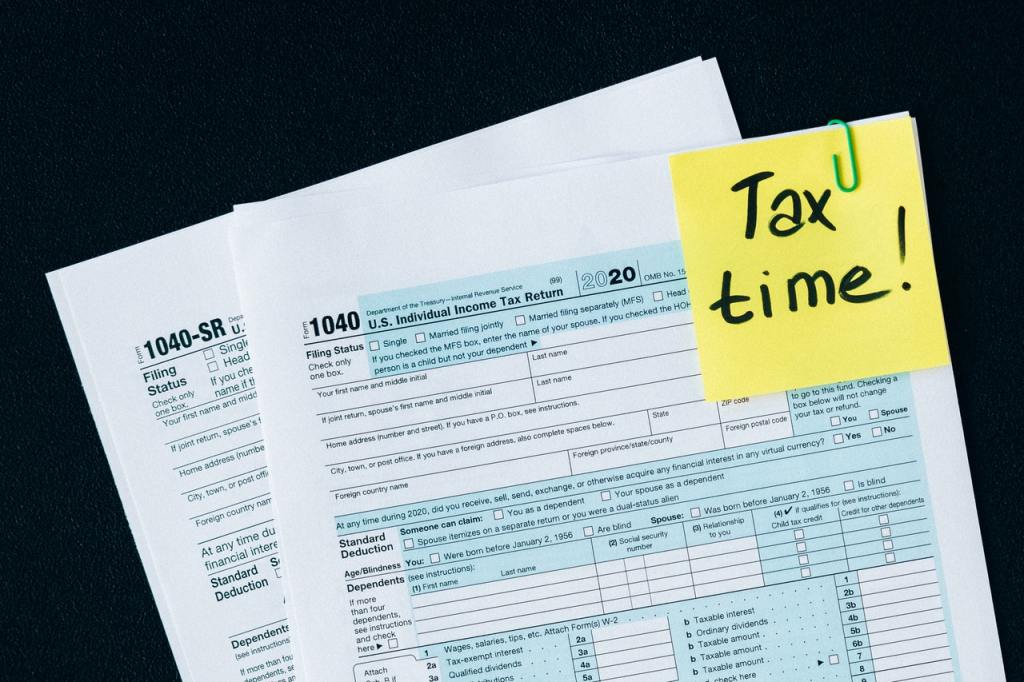
And finally: taxes – something that you definitely have to account for and pay attention to if you’re considering investment in mutual funds.
First off, when you sell your shares of a mutual fund, you’ll be subject to capital gains tax, either short-term or long-term depending on whether you held your shares for up to a year (short-term) or over a year (long-term). This is no different than when you buy or sell an individual share of stock.
But – and this is the big but – mutual funds may subject you to taxes at times other than when you buy and sell them. Mutual funds are essentially just a pool of underlying assets of which you’re a fractional owner. When some of those underlying assets issue dividend payments, you receive your proportionate share, and when the fund distributes them to you, they’re taxable as dividend income. A concept I won’t delve too far into here is that, depending on how long the mutual fund has held a dividend-paying share, the dividend may be considered ordinary income to you, or it may be considered a qualified dividend eligible for a lower tax rate. When you get your tax form from the mutual fund (or brokerage), it’ll classify the dividend for you and your tax software or accountant will take care of the rest.
That all makes sense, right? Capital gains from selling shares and dividend income – just like when you hold stocks. But whoa, here comes a curveball. A tax curveball, which is more like a knuckleball. There’s another tax you’ll be subject to when you hold mutual funds that’s different than when you directly hold shares of stock.
As I discussed above, mutual funds engage in transactions to keep the fund aligned with its stated risk profile and investment goals, which means that at times, a fund will buy and sell assets. When the fund buys and sells assets, some are at a gain and some are at a loss, and, you guessed it, there are capital gains and losses. And those are passed through to you – the fractional owner of those underlying shares. There’s effectively no different treatment just because they’re owned through an intermediary, meaning that the fund passes through the capital gains (short and long term) to you, and you’re taxed on them.
Not only that, but you’re taxed on them without actually receiving any cash – that capital gain is automatically reinvested into the fund and you receive additional shares. This means that in a given year, you may incur capital gains from holding a mutual fund, even if you don’t sell any of your shares in the fund itself. And you’ll have to pay the tax on this capital gain out of pocket, because you won’t actually receive a cash distribution from the fund when the capital gain occurs. (You could sell shares if you need cash to pay the tax, but I wouldn’t recommend doing that, as it’ll diminish the value of your investment).

Now, this isn’t all bad – what’s actually happening is that you’re paying capital gains tax over the duration of your investment in the fund, rather than at once when you sell your shares. When a mutual fund distributes its capital gains, it reduces the value of the shares themselves. When your capital gain is reinvested, it effectively raises your tax basis in the overall shares that you own. So, when you go to sell your shares, you’ll have the same overall cash gain as if none of this ever happened, but you pay less capital gains tax at that point because you’ve been paying it along the way.
Complicated enough? How about a simple example. In 2020, a mutual fund is worth $100 million and has 1 million shares outstanding, with each share worth $100 (no management fees in this example, if only…). You own 100 shares for a total value of $10,000 – not bad. In November, the fund distributes $10 million of capital gains, so 10% of its gains. This means that you will receive a capital gain distribution worth 10% of your holding: $1,000. Each share is now worth $90. But, your $1,000 is automatically reinvested, so you end up with 11.11 additional shares ($1,000/$90), for a total of 111.11 shares, which is worth: $10,000 (111.11 x 90). On that year’s tax bill, you’ll be responsible for $1,000 of capital gains (not $1,000 of tax, but $1,000 of gain, taxed at your rate). Remember, you won’t actually receive $1,000 cash, but you’re still liable for the $1,000 of capital gain.
What happens if you sell your shares in the following year? Say you bought your original 100 shares in January 2020 at $50 and sell in February 2021 for $120 per share. In February (over a year later, i.e., long-term), your long-term capital gain is $8,333. This is equal to the sales price of $13,333 (111.11 x 120) minus your basis of $6,000 (100 x 50 + 11.11 x 90). You’ll pay long-term capital gains tax on $7,333 of gain.
Compare this to what would happen if the capital gain distribution in 2020 didn’t happen. You’d still have 100 shares, but they would have been worth more come February 2021. I won’t show the math, but trust me that each share would be worth $133.33, for a total value of $13,333 – sound familiar? Your investment returned the same $8,333 ($13,333 – $5,000) when you sell in February 2021. But your taxable gain is different. Your basis in this situation is just $5,000 (100 x 50), so in 2021, you’re responsible for capital gains tax on your entire gain. In both scenarios, you pay tax (at your tax rate at that time) on a total of $8,333 in capital gain, but in the first scenario you paid tax on $1,000 of gain in 2020 and $7,333 in 2021, while in the second, you pay tax on the entire gain of $8,333 in 2021.
Of course, the second scenario is fiction, while the first is the way you actually pay taxes on mutual funds. Because of the way mutual funds are taxed, there are investment strategies to offset these “phantom” gains. “Phantom” is the industry term for them, and they bear that name because they’re gains on which you pay taxes, but don’t actually receive any money. This concept is also known as “imputed” income. In a separate post, I talk more about strategies investors use to mitigate the impact of phantom gains.
The point is – mutual funds come with taxes even when you don’t sell your shares, and don’t be surprised when you go to sell your mutual funds and have quite a few more shares than you remember buying. Keep the tax aspect in mind when deciding whether to purchase a mutual fund, but remember that mutual funds are a potentially easy way to diversify your holdings without having to do the work yourself. And mutual funds can be a nice way of holding investments to build the nest egg you’re after to achieve FIRE.
Similar to mutual funds are ETFs, which, like mutual funds, are managed baskets of underlying assets. Unlike mutual funds, however, ETFs generally do not incur phantom gains. I cover ETFs in detail in a separate post: Investing – Exchange Traded Funds (ETFs).
 The FIRE Investor's Guide to Early Retirement