
Whenever I tell people that one of my goals is to pursue FIRE and retire early, some variant of the question inevitably comes up: what are you going to do with yourself? You might think, if you’ve been reading this site, that my end game to write a treatise on taxation, and you’d only be partially wrong. Other than that, however, my answer trends towards a firm “not entirely sure.”
So what exactly can you do with yourself if not work? It’s a strange notion that we spend our lives trying to break free of our dependence on wages, and yet the answer to what we do with that freedom is so unclear. And that may be the point. Maybe it’s losing the day to day structure that comes with wage-earning jobs, and earning the freedom to do whatever you want whenever you want.
Perhaps, then, you envision yourself waking up every morning and heading to the beach or the golf course or the tennis court, relaxing for a few hours, heading to the farmer’s market and then home to curate dinner. Sounds nice, doesn’t it? Especially the concept of “curating” dinner – sounds so much more elegant than cooking. I picture taper candles and heavy drapery.

Except for one thing. And this is something that I always keep in the back of my head. I’ll often envision, given the gift of freedom, that I’ll do things that I currently do not have the time to do. Working 50 hours each week, on top of taking care of the kids and the household chores leaves little time to make it to the beach or the golf course or the tennis court or the farmer’s market. When presented with the offer of free time, those are the immediate go-tos because they’re simple and it’s something I want to do right now but can’t.
But is that really enough to keep someone interested when, theoretically, those 50 hours per week open up?
I’ve met people who have sold companies in their late thirties and made more than enough money to sit by the pool for a few hundred years. Yet, here they are in their early 50s and they’re working, whether building a new company or taking on a new job or whatever. And they’re facing all the same problems that stress us out every day at a job: deadlines, financial performance, early mornings, late nights, endlessly pointless conference calls, etc. etc. Whenever I ask why, the answer is usually the same: they couldn’t turn off their brains.
My statistically insignificant study sample, together with light internet research, leads me to the conclusion that transitioning to idle is not a perfect option for everyone. I’m no psychologist, but I would think the reason is that we humans crave some form of structure to prevent boredom from overwhelming us.
Which brings me to the point of this post – what are some good ideas to consider for the person who is able to achieve FIRE or some form of early retirement? Now this where there are plenty of articles floating around the internet, most of which I find incredibly superficial and not in the least helpful. They tend to say things like: travel, pursue a craft, take a part-time job, or play golf. To which I say, thanks for the obvious. And then I realize, maybe I shouldn’t be so harsh because I’m going to talk about these options, but hopefully do so on a less superficial level.
So here’s my list of a few things I’ve considered. As this is a fruitful, interesting, and even fun topic, I’ll post more articles with additional ideas – when they come to me.

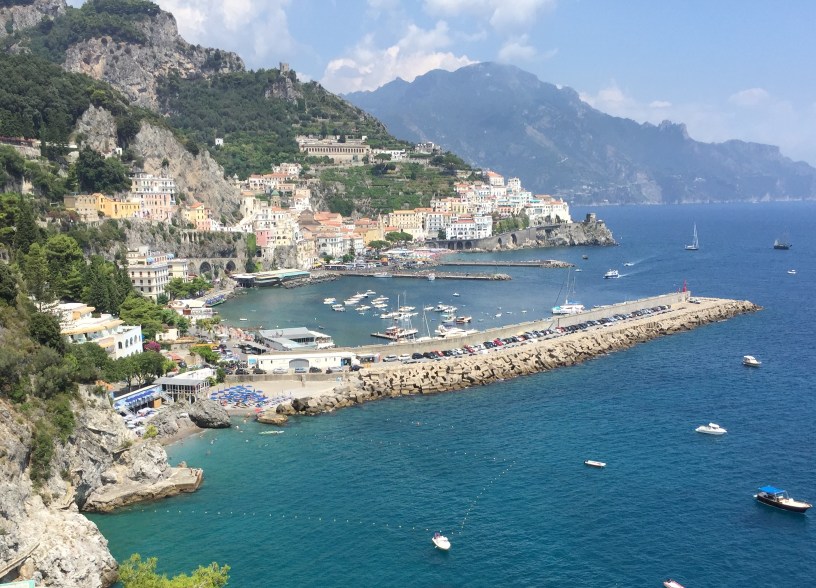
Number One: spend an extended period of time abroad. With children this is somewhat constrained because you have to consider their schooling, so it may be limited to three months over the summer. But whether it’s a few months or a year, getting out and experiencing a new culture (or experiencing greater depth to a place you’ve been before) for more than the few days you get on vacation is an attractive option. Traveling abroad is a fantastic way to open your horizons, but going for a few days or even a week hardly scratches the surface. By the time you get there, see the sites, and take in a bottle of wine, it’s time to head back to the airport. You rarely get the opportunity to meet people, or to spend a few days doing nothing other than walking around and exploring. Maybe sitting in a restaurant for a few hours with a drink or a coffee and simply observing. The sort of simple pleasures that are available only with time and the ability to refrain from checking e-mail every few seconds.
Not only can this be a great experience for you, but also for your kids. I never had the opportunity growing up to spend any time abroad, let alone an extended period. When I finally did, it was eye-opening and something I immediately embraced, if you couldn’t tell. My theory now is that exposing kids to it when they’re younger can enhance their perspective on the world. And because kids have not yet lost the unique ability to soak up languages, it might be possible – and easier – for them to pick up a new skill.
Number Two: This one is dependent on whether that 6% assumed rate of return that I discuss throughout this site actually holds up, although this can be done economically with a little effort. Number two is to travel to a number of different places/regions and take cooking classes in each one. Not one of those three-hour tourist classes that takes you to a street market and then brings you back to a kitchen where most of the food is pre-prepared and you’re plied with alcohol. (Those are fun by the way, not knocking those).

I’m talking about an actual, multi-day, introductory cooking class to the cuisine where there truly is an option to learn about the way they use ingredients and shape their dishes. Really enough of a foundation to take that knowledge back home and use it to cook not only the specific dishes taught in the class but also variants of those dishes. Maybe a few days in France, Spain, and Italy, then to Turkey, China, Japan, Singapore, Thailand, and other places in between and among them. There are so many to choose. Obviously I’ve spent some time thinking about what to do, but not the precise details. That requires more time than I have…for now.
Number Three: Now armed with cultural perspective and cooking prowess, and likely back at home – what to do? The obvious answer is to take a deeper interest in my kids, but let’s get real, you can’t follow them around all day. Make sure they do their homework, support their endeavors and curiosity, talk to them as much as you can to make sure they’re ok, and drive them to where they need to be. Most of us are able to get there even while working full-time, but to the extent you can’t, this is the opportunity. If you don’t have kids, don’t worry about this one.
So in addition to filling the voids in parenting, what is number three? My vision is to find a new, part-time job. That’s right, to work. Unless blogging really takes off to the point where it requires day to day attention (unlikely…), I mean a vocation that makes use of my background and skills, but does so in a way that accomplishes something I haven’t yet been able to do. To date I’ve spent my life in the private sector, generating revenues and returns that benefit shareholders. My hope is to find a job where the benefits accrue to those who truly need what I can provide, and for whom the result is not necessarily monetary in nature. This outcome is still somewhat blurry and less concrete than cooking classes, and will be highly time-dependent, but something that stays with me.
Even if this isn’t for you, the part-time option might be something to consider generally. As more and more companies offer flexibility as a perk – and who knows what the future will bring in this department – going to a flexible, part-time schedule might be a nice way to continue working while creating more time for yourself and your family.

And maybe it’s not so much a part-time job in your old vocation, but taking on an entirely new career. Switching fields mid-career is a time-consuming challenge, as anyone who’s ever browsed job postings undoubtedly knows. They always seem to want experience in the precise field, which of course you might not have, try as you might to explain in a half-page cover letter how your actual experience “translates well.” I’ll put that in quotes because it’s a recognizable phrase.
But if you can afford to take a starting salary and build experience, or even go so far as to obtain the educational background you might need, the opportunity is there waiting for you.
Finally, maybe it’s just doing something crazy. Pursuing a dream type career like becoming a writer. Perhaps the romantic notion of the bohemian lifestyle has always enthralled you, but for the fact that you can’t realistically take your family out of your suburban house and move to an attic apartment in Paris (or maybe Brooklyn). Now that you can possibly afford to live through the struggles of a burgeoning writer without the threat of scurvy, it might finally be time to take on the challenge – even if it means writing in your suburban home office while listening to La Boheme.
Number Four: Number four is an offshoot of number three, and is something that may or may not be available in the short-term after “retirement,” particularly while the kids are still in school. I’m talking about working abroad. The logistics of this are more difficult. Nowadays of course there are plenty of expats, though if you look into it, you see that many Americans at least start their jobs working abroad by transferring to their current employer’s office that happens to be in a different country.

If transferring offices is not an option (or, of course, you no longer care to stay with the same vocation), obtaining employment abroad faces bureaucratic hurdles, the most common of which is that before you can get a visa, you need to have a job, yet some jobs might not want to hire you if you don’t live where you intend to go. And in some countries, the only way an employer can sponsor your visa is if they can show that a citizen/resident isn’t available to perform the particular job. Nevertheless, perhaps with more time on your hands and a persistent attitude brought about by newfound cooking skills, you’ll be sufficiently inspired to leap these hurdles, if this is something you’ve thought of pursuing.
These are just four examples of things I’ve considered. Everyone is different and I’m sure that everyone either has a more distinctive vision of how they’ll spend their time, or no vision at all. And remember, spending every day on the beach or the golf course may very well be it – doesn’t sound that bad to me now, and will definitely be part of the future, regardless of whether or which of the above (if any) I end up pursuing.
I’ll post more articles on this topic. Consider this a sprinkling of a few ideas to get the ball rolling.
 The FIRE Investor's Guide to Early Retirement