

Penny stocks and/or their close relative pink sheets make a compelling topic for movies about the stock market. And if you’ve seen movies like Boiler Room or The Wolf of Wall Street, then no doubt you have some familiarity as to why they make for good storytelling. Let’s talk about what penny stocks really are, why they’re interesting, and why an average investor might hold them, notwithstanding what you’ve seen about them in the movies.
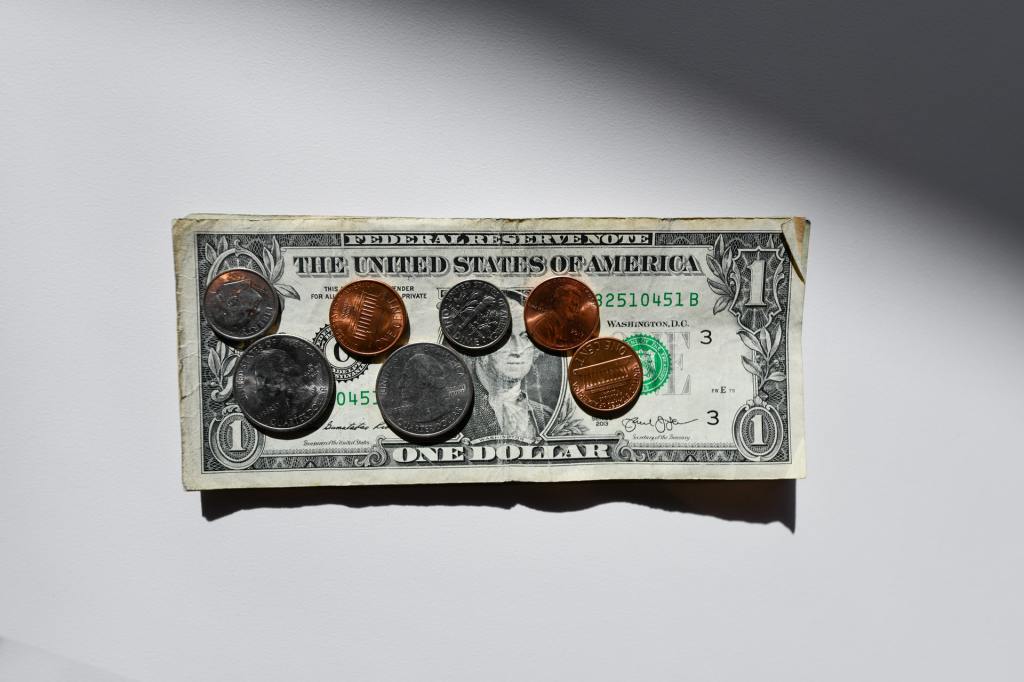
First, a distinction. Penny stocks and pink sheets are not the same thing, though there is quite a bit of overlap. Penny stock is a fairly self-descriptive term and generally refers to stocks with a stock price under five dollars. Traditionally speaking, a true penny stock is one that trades in the range of cents or fractions thereof, i.e., $0.0001 or $0.00001 or $0.1 or $0.4, etc. Nonetheless, the term encompasses the whole range from a fraction of a cent up to $5.
Penny stocks can and do trade on traditional markets, such as the Nasdaq, though a good amount of penny stocks are what are called pink sheets. Pink sheet stocks are those not traded on traditional markets like the Nasdaq, Dow Jones, New York Stock Exchange, etc. Rather, pink sheet stocks trade on the “Over-the-Counter” market (“OTC” if you want to sound like you know what you’re talking about). OTC markets are now entirely electronic with no traditional trading “floor” to speak of – think more of a person to person sale. When a stock trades on an OTC market, it’s subject to far fewer requirements than stocks trading on traditional exchanges like the Nasdaq.
Here’s where the concepts merge. A good chunk of penny stocks trade on OTC markets and a good chunk of stocks traded on OTC markets are penny stocks. It’s not complete overlap, but it’s significant overlap.
Another concept related to pink sheets is the Over the Counter Bulletin Board (OTCBB). OTCBB is separate from the pink sheets but provides the similar function of listing and quoting OTC stocks. The difference is that OTCBB is provided by FINRA and requires listed companies to register with the SEC. Companies listed on the pink sheets have no such registration requirements, and only have to meet minimal requirements to be listed.
Trading Pink Sheets and Penny Stocks
So what’s the allure of OTC stocks or penny stocks? To put it simply: low price and volatility.
Say you only hold blue chip stocks. How do you earn $1,000 in a day? On a volatile day for a blue chip, let’s assume it might move about 1%. So, if the stock is trading at $200 per share, and you assume it’ll go up to $202 by the end of the day, you’d have to buy 500 shares at $200 and then sell when it hits $202. That first outlay to buy those 500 shares will run you a cool $100,000, which you then sell for $101,000. (Don’t get me wrong, it’s this relatively low volatility that makes blue chips attractive for long-term investors.)
Making a quick thousand with blue chip stocks takes quite a bit of capital. But, let’s take penny stocks. If there’s a stock trading at 5 cents, you buy $500 worth (10,000 shares), and it triples on the day to 15 cents, you’ve made your $1,000 with a much lower outlay of cash. Do penny stocks triple on the day? Not all the time, but sometimes. Every so often there’s a high volume day for any number of reasons and because of the low price, demand might take off. When this happens, you can have a stock trading multiples higher in just a few hours. There have certainly been situations where a stock will go up by several hundred percent in a few hours. Not always, but sometimes.

What’s the further allure to penny stocks? Say you’re that investor with $100,000 to burn and you’ve got an appetite for risk. If you invest your $100,000 and it goes up to $300,000, you’ve made some serious cash. In this (highly unlikely but not entirely impossible) example, you’ve earned $299,000 more than going with the blue chip.
All this seems a little too easy on paper, right? So let’s get to the downside. And that is: penny stocks, OTCBB stocks, pink sheets, etc. come with much higher risks than your typical Dow Jones, Nasdaq, etc. stock (which are, of course, themselves risky). For one, the companies trading on these markets and with low share prices do not have the market capitalization that larger companies do. They tend to be more speculative in nature, smaller, and much more likely to flop (given that many do). And sometimes, the companies listed on these exchanges are once-great companies that have fallen from their graces due to some adverse financial event and no longer qualify for listing on the major exchanges (although this can present some opportunity).
Plus, with the lesser registration requirements and the fact that not all companies trading as pink sheet stocks are required to report to the SEC, there’s less information available about them, making it more difficult to do your due diligence. Sometimes the most information you can find out about a company is from message boards filled with shareholders hoping for an event that sends the stock skyward. But you have to take that information with a serious grain of salt, given the incentives of those shareholders to make hopeful and potentially misguided statements about the company’s prospects (not all of which are strictly in accord with securities laws about forward-looking statements).
And if we think back to the movies I mentioned earlier – those movies depicted the ugly side of pink sheet/penny stock trading: the pump. What they were doing in those movies (loosely based on things that used to and still do happen) was creating artificial demand for shares of companies with dubious prospects. The only reason the price went up was that the brokers were pushing them despite the lack of underlying financials or prospects. The brokers who do this profited in two ways: (1) by earning high commissions from the sales and (2) by having a straw man who owned shares and would sell them at artificially high prices and reap the profit. Meanwhile, the duped investors were left holding worthless shares of stock. So the movies, albeit entertaining, showed how these brokers profited off human misery.
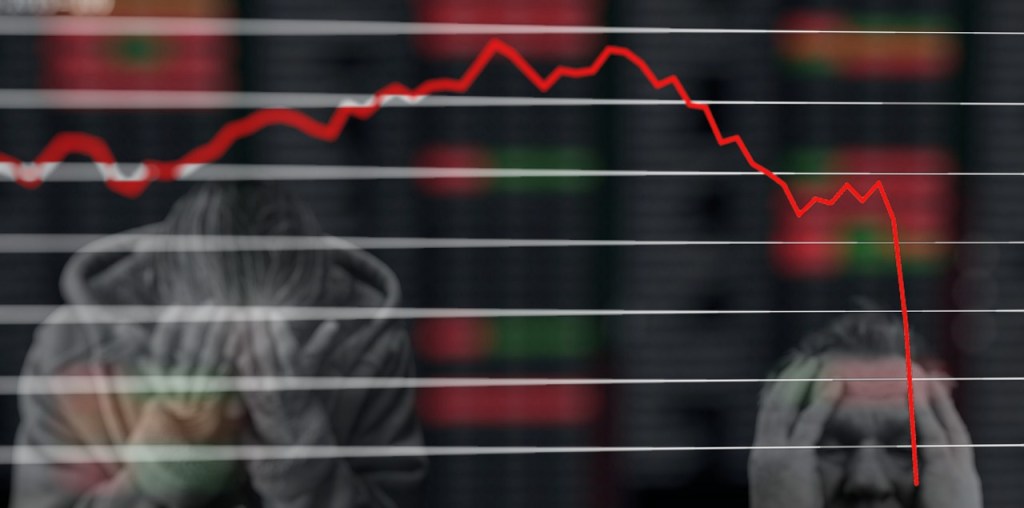
Lesson to the wise, then: when trading in penny stocks or pink sheets, and even OTCBB stocks, be careful of what you’re getting into, and be especially aware of the fact that you’re getting limited information about the company. As you’ve been rightly forewarned, this information gap has been and can still be abused. Don’t become another victim by not doing proper due diligence, whatever that may be.
And while the information gap may seem to be one of the biggest challenges of trading these stocks, there are others that can impact trading almost as significantly: liquidity, volume, and clearing time.
Remember, you’re not trading blue chip shares when you’re buying and selling penny stocks off the pink sheets. Because these tend to be smaller companies, there aren’t millions or billions of shares outstanding at any given time. If you log on to your brokerage account and want to buy shares of any of the DOW 30, for example, you’ll have almost no issue placing a trade and having it clear instantly at the prevailing price.
The same may not always be true of penny stocks. For one, there’s often less volume of these shares, meaning that there are fewer out swirling around on the market. Second, the market is not as robust as the majors. Just because you’re willing to buy a certain number of shares does not mean there are sellers willing to sell that many shares, and it can therefore take some time for the market to match buyers and sellers. This time lag, along with the fact that there may be multiple buyers and sellers can result in different prices for the shares you buy or sell, even if they’re included in the same buy or sell order.
For example, if you want to buy 5,000 shares of penny stock 123, you place a buy order at what you see as the prevailing price, $0.05. But if 123 is trading with low volume, the market may end up unable to find one person willing to sell 5,000 shares at that price. If you place a market order (one that says buy me these shares today at any price), the market could match you with one person selling 2,000 at $0.05, 2,000 at $0.06, and 1,000 at $0.07. So although you thought you’d be paying $250, you end up paying $290 for those 5,000 shares. (Note: this does sometimes happen when you buy more liquid/high volume stocks, but the difference is generally a fraction of a cent, unless you’re buying huge volumes).
It can also take some time for this market match to come together – meaning you might not see your shares instantaneously. The lag time can impact your ability to take advantage of volatility if you’re hoping to ride a big swing and sell quickly. Ultimately, what this means is that the investor above putting $100,000 into a penny stock and taking $300,000 out may be unrealistic for some penny or pink sheet stocks if they don’t have sufficient volume.
The conclusion here is that trading on these other markets can have some noticeable differences than trading on the major exchanges. There’s definitely some profit potential to be had, but there are also some critical risks that have to be considered. Choose wisely whether you’re able to tolerate those risks and, if so, do what you can to mitigate them.
For the FIRE Investor
So if FIRE is mostly about buy and hold, why are we talking about high-risk, potentially high-volatility stocks?
Good question.
For one, penny and pink sheet stocks warrant a discussion because they do have some visibility and can be intriguing for anyone getting into investing. Except in the movies, you don’t often see the stories of people who wipe themselves out trading penny stocks, and even the movies are mostly focused on the brokers.
If the creeping thought catches you that you’re primed to make a fortune in the OTC market, it’s worthwhile to discuss the risks of fishing in this pool. So keep everything discussed in this post in mind when assessing if this is right for you. In addition to the risks discussed above, trading penny stocks, etc. requires more of your attention than your average 10-30 years of holding index funds. Sure you need to watch those, but you probably don’t need to sit and pay attention to them on a daily basis. Trading penny stocks is not typically a buy and hold game. The intrigue associated with these stocks is that they’ll jump at any moment and make you a huge margin. Even if you hold onto them for a while, you still have to be ready to move at the right time.
Thus, if you have a day job and can’t keep your eyes on the market all day, other than incessantly and obsessively checking your stocks app, you have to consider whether penny stock trading is really for you.
Nevertheless, it’s true that penny stocks and pink sheets can present an opportunity, if you do it right. If you don’t have the time to trade actively, there are steps you can take so that you can trade stocks that require attention but without having to be actively engaged at all times, including setting price alerts or implementing stop losses, trailing stop orders or other measures that can both limit your exposure or help you capture gains without constant monitoring (though you still need to pay attention).
Like everything, it comes down to your risk tolerances and what you have the time and ability to accomplish. If you’re too busy for the day to day and you want to mitigate the risk of volatility, penny stocks may not be the right market. But if you have the appetite and the time, and you can understand how to mitigate your risks, it’s up to you whether this can be a potential boost to your portfolio.
 The FIRE Investor's Guide to Early Retirement